Why I Joined the NSW SES
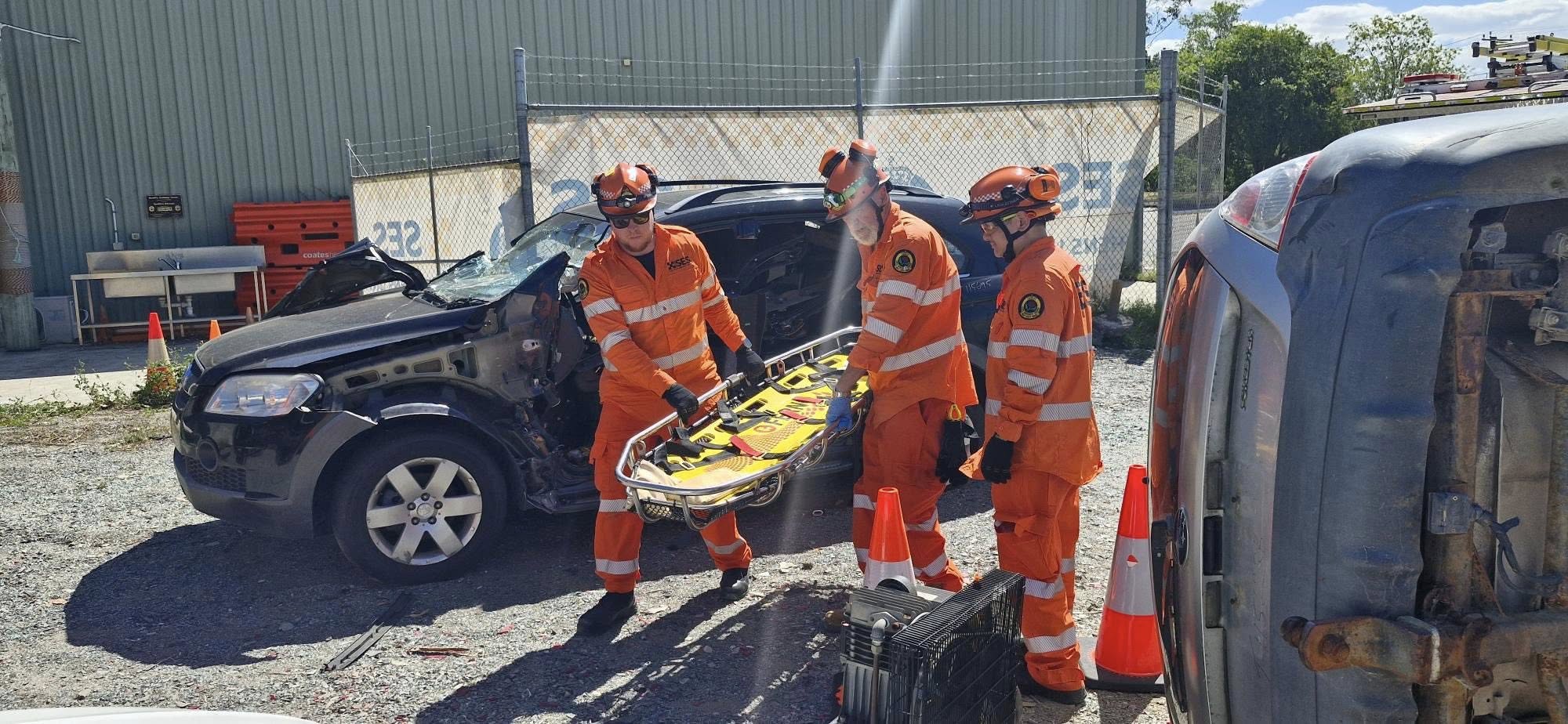
PIARO training November 2025
Most of my professional background is in cyber security and IT, analysing risk, responding to incidents, and working within structured, high-assurance environments.
Joining the NSW State Emergency Service (SES) was a deliberate step outside that world, into one where:
- Risk is physical and immediate
- Teamwork is non-negotiable
- Decisions have real-world consequences
I wanted to contribute locally, learn a completely new skillset, and put myself back into a position where I’m genuinely new at something.
Road Crash Rescue: A Different Kind of Incident Response
I joined a Road Crash Rescue (RCR) unit, which focuses on:
- Vehicle incidents
- Entrapment scenarios
- Managing hazards in uncontrolled roadside environments
- Disciplined, procedural team response
What stood out immediately is that RCR isn’t about speed or heroics, it’s about control, coordination, and safety.
First Reality Check: The Road Is the Hazard
One of the earliest lessons is that the road itself is often the most dangerous element.
Before tools, before vehicles, before casualties:
- Scene safety
- Traffic management
- Hazard identification
Nothing proceeds unless the environment is made as safe as possible for responders and those involved.
That principle is enforced constantly, and for good reason.
What Training Reinforces Early
Safety Over Everything
Dynamic risk assessments, TAKE 5, exclusion zones, and constant reassessment are baked into every task.
If something feels rushed, it usually means something’s been missed.
Procedure Beats Improvisation
RCR work is deeply procedural:
- Defined task sequencing
- Clear role allocation
- Tool discipline
- Ongoing communication
Good outcomes come from doing the basics correctly every time.
Teamwork Is the Capability
Nothing is done solo.
Success depends on:
- Clear leadership
- Trust in teammates
- Knowing who is doing what at all times
- Speaking up when something doesn’t look right
Individual skill matters, but team coordination matters more.
🎓 Training & Capability Built in the First 3 Months
One thing that became clear very quickly after joining the NSW State Emergency Service (SES) is that operational confidence is built through structured training, not assumptions.
Over my first three months I’ve completed a mix of foundational, operational, and specialist courses designed to make sure volunteers are safe, interoperable, and job-ready before stepping into real incidents.
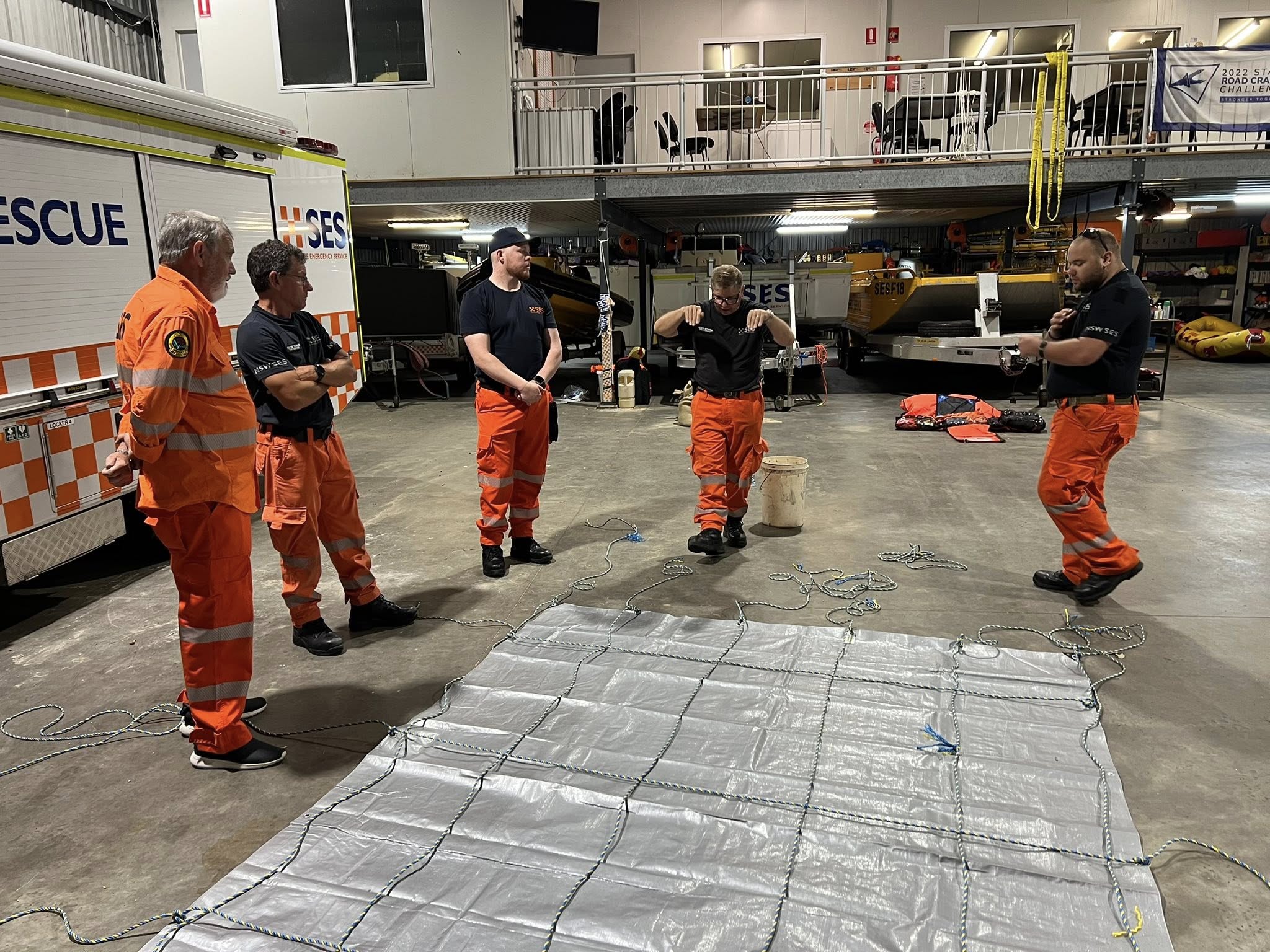
Training September 2025, Tarping
Core Induction & Foundations
- NSW SES Induction (eLearning)
- Code of Conduct (eLearning)
- Diversity and Inclusion (eLearning)
These courses establish expectations around behaviour, safety culture, and professional conduct, setting a consistent baseline across the organisation.
Incident Management & Awareness
- AIIMS Introduction (eLearning)
- Tsunami Awareness (eLearning)
- Flood Rescue Awareness (eLearning)
- Bush Fire Awareness – NSW RFS (eLearning)
- Electric Vehicle Awareness (eLearning)
This training builds situational awareness across different incident types, reinforcing how SES integrates with broader emergency management frameworks and emerging risks, like EV-related hazards.
Operational & Field Skills
- Field Core Skills Course
- Participate in Rescue Operations Course
- Operate Communications Equipment Course
- First Aid Course
These courses focus on fundamentals that apply to every response:
- Safe movement and teamwork
- Clear communication
- Basic medical response
- Operating effectively under tasking
They’re deliberately practical and repetition-heavy. Competence is expected, not assumed.
Road Crash Rescue & Specialist Capability
- Road Crash Rescue Course
- Electric Vehicle Awareness (applied context)
As part of a Road Crash Rescue (RCR) unit, this training introduces:
- Scene safety and hazard management
- Procedural rescue techniques
- Working within tightly coordinated teams
- Understanding modern vehicle risks and energy systems
The emphasis is always on safety, discipline, and control, never speed for its own sake.
Technology & Location Awareness
- Beacon Familiarisation Course (eLearning)
- Beacon Field User Course
These courses support search and rescue capability, reinforcing how technology augments but never replaces sound fieldcraft and decision-making.
Job Readiness
- Job Ready Pathway
This pathway ties everything together, making sure volunteers are not only trained, but prepared to operate safely and effectively when deployed.
Reflection on Training So Far
What stands out most isn’t the volume of courses, it’s the consistency of messaging:
- Safety before action
- Team over individual
- Procedure over improvisation
- Training before exposure
It’s a model that mirrors high-assurance engineering and incident response environments, and one that builds trust quickly within a team.
📊 First 3 Months – Response Statistics
While I’m still early in my SES journey, the past three months have already involved real-world responses across different incident types.
Responses attended:
Parallels with Engineering & Cyber Incident Response
Despite being a different domain, the overlap with engineering and cyber work is pretty obvious:
| Engineering / Cyber | SES / RCR |
|---|---|
| Incident triage | Scene assessment |
| Risk controls | Hazard mitigation |
| SOPs / playbooks | Rescue procedures |
| Clear comms | Radio & verbal discipline |
| Post-incident review | AAR/After Action Review |
Different tools, same principles.
What These First 3 Months Have Changed
Being part of the SES has already reshaped how I think about:
- Risk in uncontrolled environments
- Decision-making under pressure
- My own personal fitness, after completing the RCR course I realised how much I had let myself go physically. As of 13 Jan 26 I’m down 6kg and am hoping to keep this trend going.
- That responding under lights and sirens is cool, but stressful
- Volunteer efforts and how much time people are committing to these agencies for free (SES, RFS etc)
Looking Ahead
Road Crash Rescue capability isn’t something you “complete”.
It requires:
- Continuous training
- Skill refreshers
- Ongoing learning from each response
I plan to keep documenting parts of this journey.
Final Thoughts
The NSW State Emergency Service is built on disciplined volunteers, strong procedures, and trust between team members.
My first three months have been challenging, grounding, and genuinely rewarding.
Still early days, but it has been one of the better decisions I have made in recent times.
Interested in Volunteering?
If you’re interested in Road Crash Rescue, flood response, storm damage, or community engagement, there’s a role that fits different skills and interests.If any of this resonates with you, the NSW SES is always looking for new volunteers.
You can put in as little or as much time as you want.
You can learn more and apply at www.ses.nsw.gov.au/volunteer.
No prior experience needed,just a willingness to learn, contribute, and be part of a team that makes a real difference in communities across NSW.