ISM-0534 Implementation Guide
Overview
ISM-0534: Unused physical ports on network devices are disabled.
This control ensures that any unused physical ports on network devices (switches, routers, access points, etc.) are administratively disabled to prevent unauthorized network access. It’s a critical physical security control for maintaining network perimeter integrity and preventing unauthorized devices from connecting to the network infrastructure.
Control Requirements
ISM-0534: All unused physical ports on network devices must be disabled.
Compliance Requirements
- All unused physical ports must be administratively disabled in the device configuration
- Physical ports not currently in use must be shut down (not just in an unconfigured state)
- Port status must be documented and regularly audited
- Ports should remain disabled until explicitly authorized for use
- Changes to port status must follow change management procedures
ISM-0534 Control Matrix
| Control ID | ISM-0534 |
| Control Title | Unused physical ports on network devices are disabled. |
| Control Intent | To prevent unauthorised network access by ensuring any physical interfaces not actively required are disabled or physically secured. This reduces the risk of rogue device connections, lateral movement, or unauthorised bridging between security domains. |
| ISM Applicability | NC, OS, P, S, TS (All classification levels) |
| Control Family | Guidelines for networkingt |
| Associated Controls | ISM-1372 (Physical infrastructure security), ISM-1386 (Admin network segregation), ISM-0587 (Review for unauthorised connections) |
Threat Context
| Threat ID | Threat Description | Potential Consequence |
|---|---|---|
| T-0534-01 | A malicious actor connects an unauthorised device to an open switch port in an uncontrolled area. | Compromise of network confidentiality or integrity. |
| T-0534-02 | A trusted user accidentally bridges two security domains or networks via a network cable. | Data spill or security domain crossover. |
| T-0534-03 | Unused management ports are exploited to bypass network zoning or NAC enforcement. | Bypass of security controls and unauthorized access to protected network segments. |
Compensating Controls: Physical Port Blockers
While ISM-0534 requires administrative disabling of unused ports in device configuration, organizations may also implement physical port blockers as a compensating control. Physical port blockers provide an additional layer of security by physically preventing unauthorized connections to network ports, even in scenarios where administrative controls may be circumvented or accidentally disabled.
When to Use Physical Port Blockers
Physical port blockers are particularly valuable in:
- High-Security Environments: Areas where physical access controls alone may not be sufficient
- Uncontrolled Areas: Public spaces or shared facilities where network equipment is accessible
- Backup Security: As a compensating control when administrative port disabling cannot be fully implemented
- Compliance Requirements: When additional assurance is required beyond software-based controls
- Legacy Equipment: Network devices that may not support administrative port disabling
Types of Physical Port Blockers
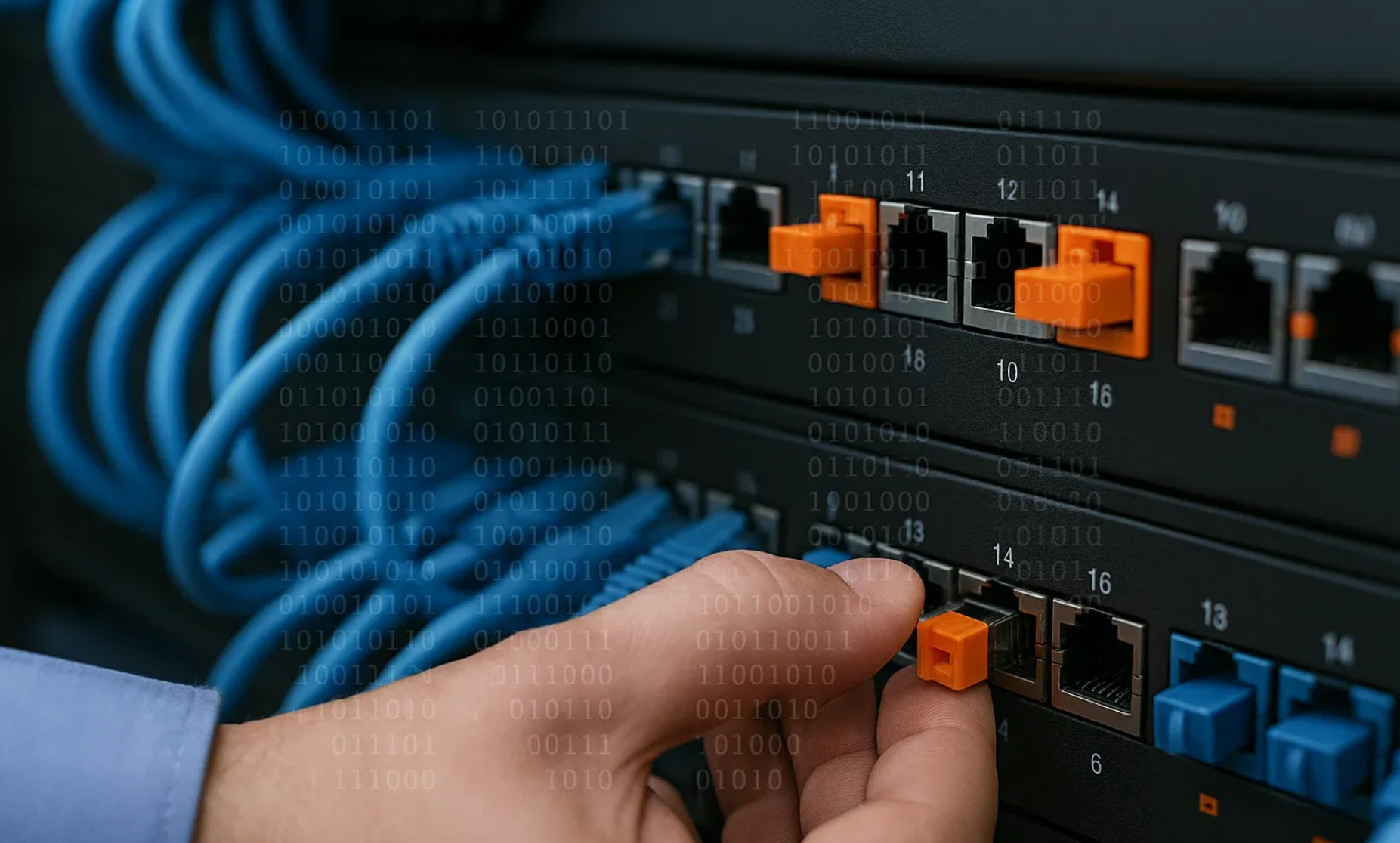
RJ45 Port Blockers: Small plastic or metal inserts that physically prevent Ethernet cable insertion into RJ45 ports. These are typically:
- Low-cost and easy to install
- Tamper-evident (visible if removed)
- Reusable and can be removed for authorized use
- Available in various colors for port identification
Example Product: Lindy RJ-45 Port Blocker
Dedicated Port Security Devices: Purpose-built hardware solutions that:
- Provide physical blocking combined with monitoring capabilities
- May include tamper detection and alerting
- Offer integration with network management systems
- Suitable for high-security deployment scenarios
Implementation Considerations
Installation: Physical port blockers should be installed on all unused ports identified during the initial port inventory process. Installation should be documented and tracked.
Management: Establish procedures for:
- Authorized removal of port blockers when ports are needed
- Tracking which ports have blockers installed
- Audits of the blocked ports during regular continuous monitoring or system maintenance
- Integration with change management processes and or engineering change lifecycle
Documentation: Maintain records of:
- Ports with physical blockers installed
- Installation dates
- Removal authorizations and approvals
- Regular audit verification results
Compliance: When using physical port blockers as a compensating control, document:
- Rationale for implementing compensating controls as opposed to administratively downing the interface
- How physical blockers address the same security objectives as administrative disabling
- Risk assessment justifying the compensating control approach
- Ongoing monitoring and verification procedures
Limitations and Best Practices
Not a Replacement: Physical port blockers should complement, not replace, administrative port disabling. The primary control (administrative disabling) should always be implemented when possible.
Combined Approach: The most effective security posture combines:
- Administrative port disabling (primary control)
- Physical port blockers (compensating control)
- Physical access controls (defense in depth)
- Regular audits and monitoring
Maintenance: Physical port blockers require ongoing maintenance:
- Visual inspections during regular audits
- Replacement if damaged or missing
- Updates to inventory when ports are repurposed
- Training for staff on proper installation and removal
Conclusion
Physical port blockers offer a practical compensating control for ISM-0534, providing additional assurance when administrative controls alone may not be sufficient or when additional security layers are required. When implemented as part of a comprehensive security strategy, physical port blockers enhance the overall security posture and help protect against unauthorized network access through unused physical ports.